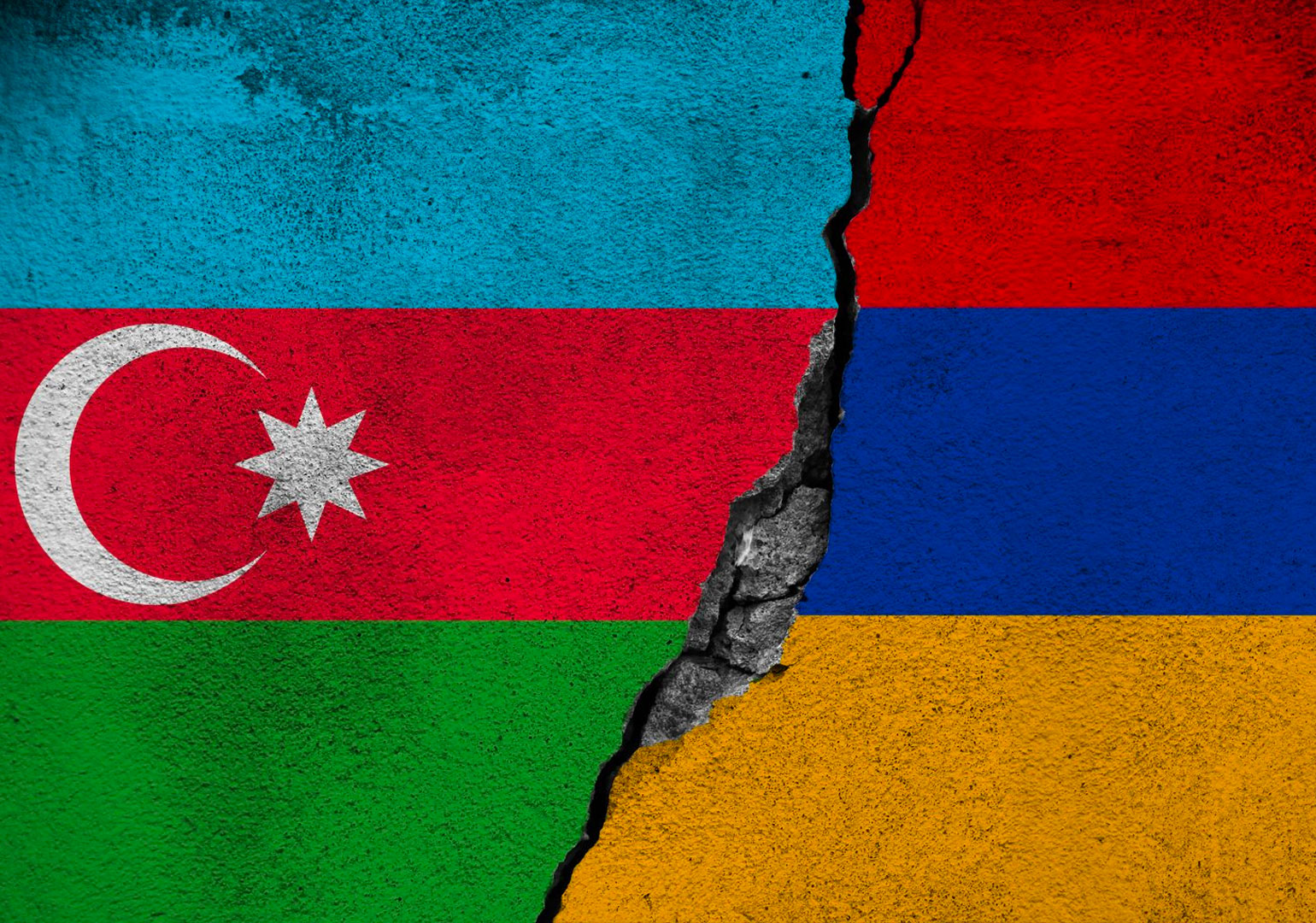
On September 13, Azerbaijan carried out a wide-scale attack against targets in Armenia. Escalating the decades-old bloodshed between the two South Caucasus countries has fuelled fears that a second fully-fledged war could break out in the region in addition to Russia’s invasion of Ukraine. The Armenian Ministry of Defense has reported that shelling started from the Azerbaijani side at midnight and targeted Armenian cities situated in the vicinity of the Azerbaijani border: Vardenis, Sotk, Artanish, Ishkhanasar, Goris and Kapan. On the contrary, Azerbaijan’s Defense Ministry accused Armenia of provoking the attacks and stated that it merely carried out “countermeasures” in a response to a “large-scale provocation” from the neighbour. In the aftermath, the recent tensions between the two countries led to the biggest number of hostilities since Armenia and Azerbaijan fought a six-week war in 2020 over the breakaway Azerbaijani region of Nagorno-Karabakh. While Baku reported it lost 50 troops in overnight clashes, Yerevan mentioned that the clashes caused nearly 105 deaths.

Since the war in 2020, Yerevan and Baku have multiple times pledged to intensify joint efforts aimed at the earliest possible resolution to reach sustainable peace and reconciliation. The most efficient way to foster reconciliation seemed plausible by developing economic and infrastructure connections in the region. However, the envisioned initiatives have not been successful as the two countries have different standpoints on the ways of their implementation. In the meantime, Azerbaijan has been far more enthusiastic about these projects than Armenia, even though Yerevan has acknowledged the beneficial nature of the planned initiatives. The Armenian government has largely remained cautious mainly due to security risks seen behind the proposed initiatives, which has led dissatisfaction in Baku. Although it was victorious in the Karabakh war, Azerbaijan was unable to carry out negotiated projects under the ceasfire agreement. Thus, Azerbaijan has regularly used military tensions with Armenia to coerce it into diplomatic concessions.
Unblocking transport connections has been one of the major issues highlighted in the ceasefire agreement. However, the fate of these envisioned links has largely remained uncertain. A working group on unblocking communications led by deputy prime ministers of Azerbaijan, Armenia, and Russia was established in January 2021, but the work of the group has not led to any significant progress. Although not explicitly discussed in the trilateral negotiations between Yerevan, Baku and Moscow, Azerbaijan has kept insisting on its plans of implementing the Azerbaijan-Armenia-Nakhchivan Corridor or the so-called Zangezur transport corridor, which would entail a transport corridor connecting Nakhchivan to the rest of Azerbaijan via Armenia’s Syunik Province. Yerevan has agreed that the transport connection would benefit Armenia because it could change the country’s economy considerably. However, Armenian official always highlighted the problem of Azerbaijan’s “corridor logic.”
A substantial issue for the Armenian government has been the interpretation of Article 9 of the November 2020 ceasefire agreement. The Azerbaijani side believes the document gives it the right to establish the Azerbaijan-Armenia-Nakhchivan transport link – an overland transit corridor linking mainland Azerbaijan with its Nakhchivan exclave. Nevertheless, the Armenian side has interpreted the reference to the term ‘corridor’ as pertaining solely to the Lachin corridor, a narrow strip that connects Armenia with Nagorno-Karabakh. Yerevan’s doubts about the Baku-proposed corridor were initially triggered after regular deployments of hundreds of Azerbaijani troops near Syunik province, through which the transport link would pass. As a result of consequent border tentions , in 2021, the trilateral working group temporarily suspended its work.
The situation has become even more strained after several comments from Azerbaijani officials. Referring to officially as the “Zangezur corridor” – a historical name for the area used by both sides – President Ilham Aliyev has threatened to establish the corridor by force if necessary, calling southern regions of Armenia “ancestral lands” of Azerbaijanis. Such statements immediately had a negative impact on peacebuilding and reconciliation processes. Additionally, in October 2021, Azerbaijan unilaterally began using Armenia’s airspace, conducting flights to its Nakhchivan exclave. Hence, the prospect of an Azerbaijani right of passage across its narrow southern region under current conditions has been perceived in Armenia as a threat to national security. The Azerbaijani government has shown its frustration with Armenia’s reluctance with regard to the finalization of infrastructure projects carried out in the border areas and has blamed it for maintaining a tense atmosphere near Azerbaijan’s borders.
In addition to the corridor, the Armenia-Azerbaijan border abounds with small exclaves dating back to Soviet times used to resolve local-level disputes. There is one Armenian exclave in Azerbaijan, and three Azerbaijani exclaves in Armenia. These territories have not been inhabited since the first Karabakh War. However, these tiny fractions of land have immense significance due to their strategic location close to major roads in Armenia, notably one of its two highways to Georgia via Noyemberian, and the highway connecting Yerevan with southern Armenia.
Despite that, the political conditions still pose serious challenges. While the leaders of both countries verbally confirm their commitment to the ceasefire agreement, they have not taken any tangible steps with regard to border demarcation and delimitation. Aliyev and Pashinyan have not reached the same page when it comes to the technicalities of border issues. For instance, during a press conference following a meeting with NATO Secretary-General Jens Stoltenberg in December 2021, the Azerbaijani president stated that there should be no border control or customs along the corridor and Azerbaijan should be provided unrestricted access to its exclave. In his response on Facebook, Pashinyan stated that the attempts by the president of Azerbaijan to draw parallels between the opening of regional communications and the Lachin corridor had nothing to do with discussions held and statements signed on that topic to date. He stated that Aliyev tried to come to a dead-end in the issue of opening regional communications.
It is worthwhile to note that Azerbaijan might have strategically chosen the time of the recent offensive. Yerevan is more vulnerable than ever as its ally Russia is witnessing heavy military losses in Ukraine and whose priorities do not lie in the South Caucasus for the time being. Baku will try to gain diplomatic concessions from Yerevan as long as Moscow is occupied with its unprovoked and unjustified aggression against Ukraine. Thus, it remains a big question how Armenia will react. Will it manage to manoeuvre and reject what Baku is “offering” or will it have to accept what is on the table?