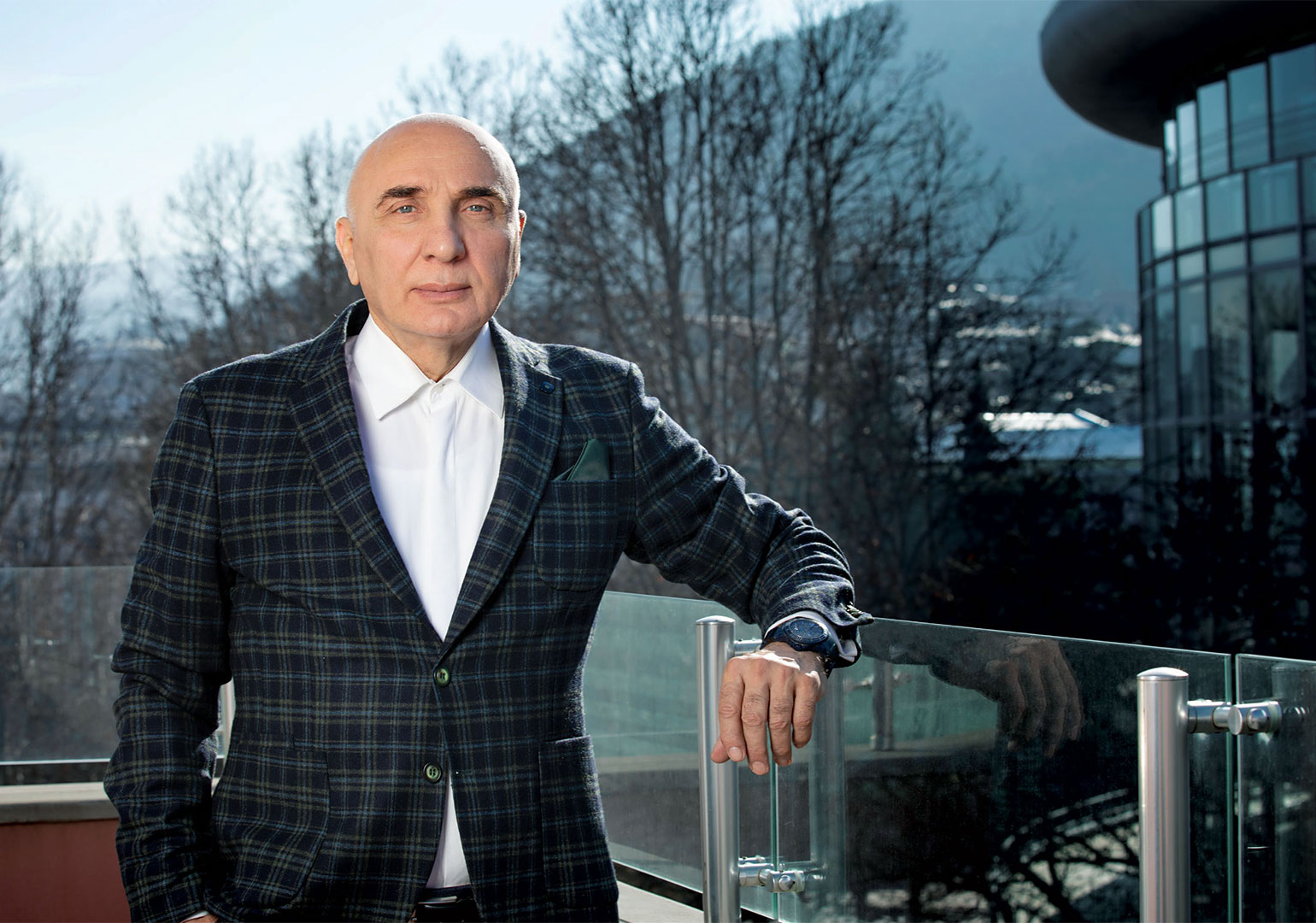
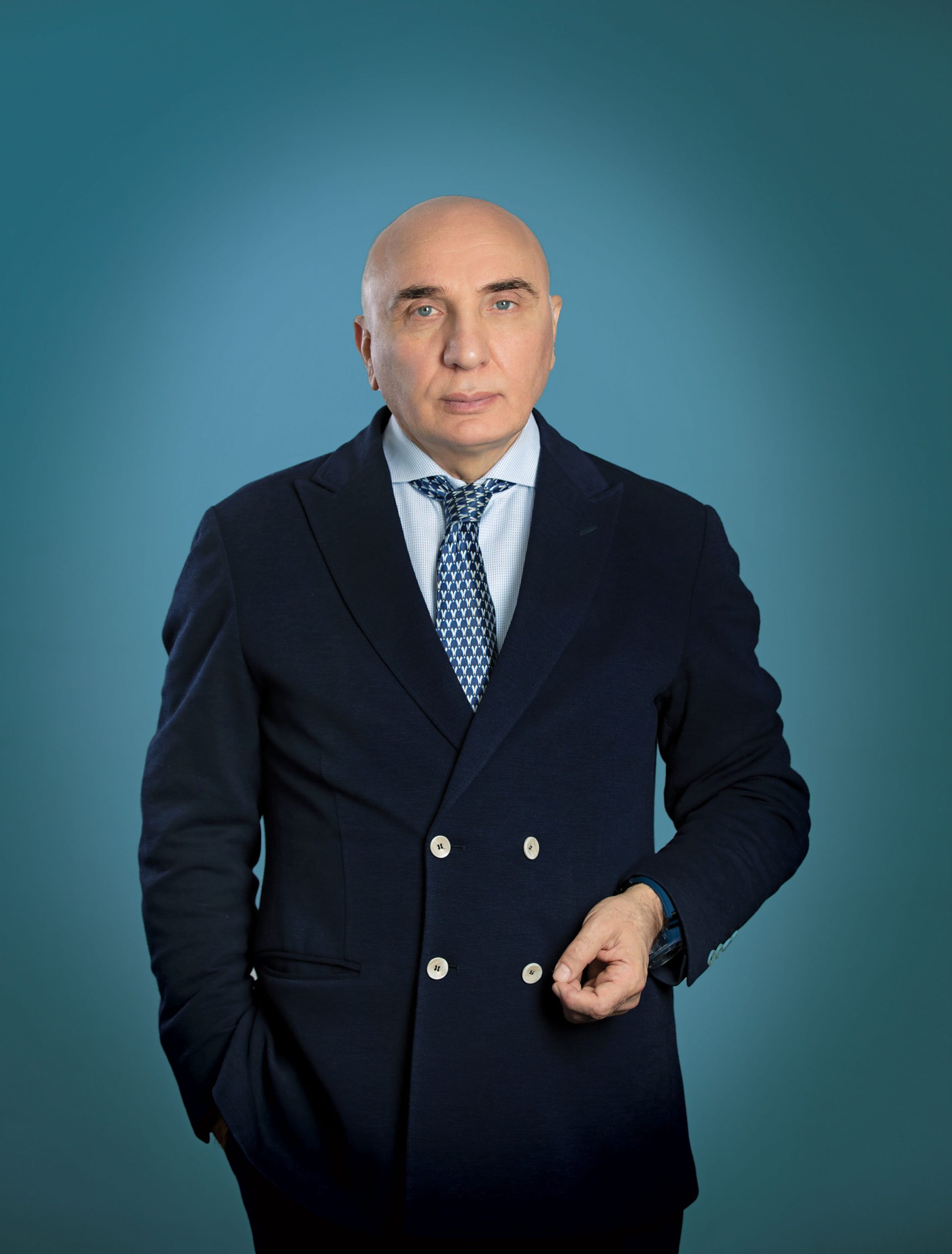
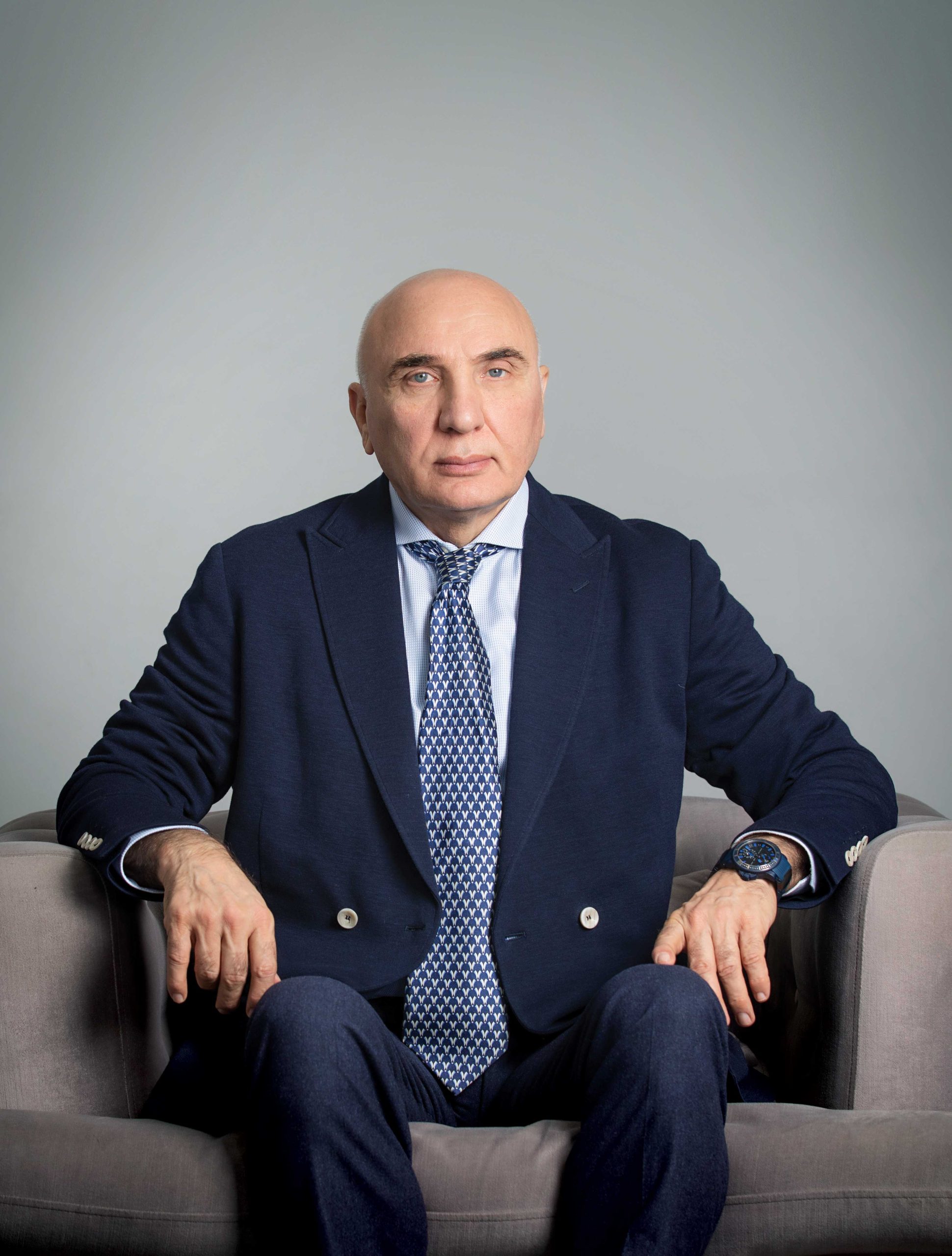
After three successful decades in the oil business, Zaal Iakobidze is preparing to invest $100 million into the city of Kutaisi. Success in the oil business has allowed Zaal Iakobidze to control a multi-million-dollar business portfolio that includes companies in several sectors. His daughter, Ana Maria Iakobidze, will help implement their ambitious plan to invest $100 million into Kutaisi.

Let us start from the beginning. You are an economist by profession. Did university prepare you for the real business world, and what challenges do you recall facing during your initial years?
If we want to start from the beginning, let’s start from school. I always ask people which school they graduated from. It gives me a certain understanding of who they are. I graduated from Tbilisi Public School N51 in 1978 and enrolled at Tbilisi State University. I was planning to become an economist, and that is the direction I initially took. I started working at the Scientific Research Institute in 1983. I began postgraduate studies at the Scientific Institute of Economics in Moscow a few years later. The topic of my dissertation was the balance of supply and demand. This is one of the critical issues in business and economics. I was lucky to have studied this subject at a time when notions of business and private property did not exist in our economy. The knowledge I obtained then helped me start and develop my business.
What was your first business venture, and what experience did you get?
I started my business activities immediately after finishing my studies. The export of specific raw materials to the West was highly in demand during the 1990s. In my case, the raw material was aluminum. However, the borders had only been open for a short while, and export was a new phenomenon for the local market. We, therefore, had to export the aluminum indirectly through another company. Your readers will know about the state of the Georgian economy in the 1990s. Revenues received in US dollars represented serious capital. This initial success gave me the spark and motivation to take the next steps.
I spent several years in Moscow before returning to Tbilisi. I have to say that there was a highly favorable environment for doing business in Moscow in the 1990s. Nevertheless, I always thought about going back to Georgia. I returned at a time when everyone wanted to leave the country.
In 1996, I began importing and selling oil products. The next step was to create a network of petrol stations under the Senta Petroleum brand. Business was going well, but political officials were closely monitoring our success. In 2012, we were forced to sell our business together with our whole network. Our average annual revenue at that time was around $12 million. I believe my business was worth at least $100 million, but we were forced to sell it at a far lower price. I was even arrested briefly but released before the change in government. The owners of Senta Petroleum later took the case to court, but we lost. The legal process lasted nine years; unfortunately, we did not get anything back.
You have been doing business in Georgia for three decades. How have the challenges in your companies changed over time, and how would you characterize the competition in the market?
The main problem has always been the government deciding to oppose you and the system working against you. As for the other challenges, there have certainly been some problematic periods. Georgia was not a legally sound country in the early years of its independence. Some issues were resolved through negotiation or conflict with different categories of people, but such challenges were often more straightforward to overcome than fighting the system. Talking to people and maneuvering was always possible. In general, I believe that if your position is correct and you act justly, you must protect yourself in one form or another. It was not an easy task, but I would not say that it made it difficult for me to do business.
The business environment and the country’s economy cannot develop without competition. However, even competition was, at times, unhealthy in Georgia. When you are placed in an unequal environment, it becomes challenging to compete. My business partners and I have never been under the patronage of any group, be it governmental or criminal. We never conducted business that way. This is due to our flexibility. All our competitors were large and inflexible firms. While our governance structure allowed us to make decisions quickly and efficiently, others needed much longer to agree on the optimal solution. We became one of the country’s major taxpayers, which was not a simple task at that time.
From today’s perspective, what is needed to operate a successful business?
I often think about what is important in business. I recently came to the conclusion that personal traits are a critical factor. This may be an unpopular view, but I believe that success in business depends entirely on a person’s strength and resolve. Knowledge, experience, and intellect are also very important, of course. Nevertheless, I think that in the type of society and legal setup we had in Georgia years ago, a firm character was needed to succeed in business.
Nowadays, it is less of a challenge. It has become much easier to do business. The situation and the processes are known and more or less predictable, which was not the case before. There are still threats and risks of fraud today, but business is much more secure than in the past.
As you said earlier, you have always had your own business and never worked for anyone else. What effect did this have on you as an employer?
Indeed, when someone starts their own business right after finishing their studies, they must be able to interact with different people, lead teams, manage processes, and make strategic decisions. All of this requires knowledge and experience.
People often make mistakes. Practice is always different from theory, so you need experience to go along with knowledge. Such experience comes with time. Nevertheless, a person’s inner character always comes out in their business relationships. The way you interact with people in life is how you behave in business, albeit with tact and a more business-like character. Ultimately, caring for people and treating them with respect is essential. My foremost objective was to never make a remark to a person that would hurt their dignity.
It is also imperative to set precise objectives and tasks for yourself. All business requirements must be formulated and delegated to the people you trust and attach expectations to.
You have quite a diverse business portfolio. Which of your businesses would you highlight from a financial point of view, and which ones are you emotionally most attached to?
From a financial and emotional perspective, the oil firm Senta is a special business for me. I have devoted almost 28 years of my life and a lot of energy to this company. I also had great success with this business. When I started out, only the subsidiaries of giant foreign oil corporations were represented in Georgia. Unlike my company, they did not have to start from scratch. Generally, when I devote a lot of time and effort to an initiative and achieve success, it becomes very precious to me.
Right now, I have another project that is very important to me. Our company, West Point, which was founded in Kutaisi, is investing $100 million into developing a 120,000 m2 plot of land that we bought in an auction in 2008. The plot in question is the former site of the Kutaisi aviation technology plant.
Part of the site is occupied by a shopping center containing a large hypermarket. We plan to use the remaining part of the territory to build a new settlement. The project will include residential areas, recreational spaces, and new commercial zones. We will also restore a park that used to be located on the territory. We plan to complete the project by 2030.
Our portfolio also includes the large logistics hub Figoil, located in Adjara. It incorporates a fleet of trucks, a hotel, commercial spaces, a gambling zone, and entertainment areas. I am developing this business together with a few partners.
We are also developing real estate and hotel businesses, as well as technical inspection centers in Tbilisi and Kutaisi. Our companies currently employ around 250 people in total.
Is it possible to balance diverse business activities and a private life?
Of course, it’s possible! The most important thing for me is my family – my wife and children, and the happy moments spent with them.
I have many and varying interests in addition to my business activities. We should not devote our whole life and energy to doing business or moving in one direction. Life is fascinating, and I do not believe a person’s main goal should be material success.
Fun, leisure, and travel are as important to me as the financial successes of my businesses. I love sports and often spend a few hours on the road going to other cities to attend matches.
People generally leave very little time for themselves to do some thinking, which I think is wrong. We must balance business and private life. Effective time management does not mean devoting all your time to running a business.
Time should be appropriately allocated to personal interests and relationships with parents and family members. Today, I see business as a means to help me achieve happiness.
How do you decide when to invest in a new business?
There are several aspects involved. First, it requires a rational approach – I must know how profitable the sector is and how attractive the business itself is. The other criterion is the possibility of minimizing the amount of human input. My priority is ensuring the company does not rely entirely on human capital.
I pay a lot of attention to who my partners are and the amount of partners I share decision-making with. I have accumulated plenty of negative experiences in this regard. Sometimes, partnerships do not stand the test of time, while, in other instances, the partnership scheme itself does not work. After going through such incidents, I had to learn how to become more careful in decisions I make, so that I don’t get left disappointed.
Who is helping you manage your businesses?
My daughter Ana Maria has been involved in managing my businesses since the age of 16. She is currently enrolled at New York University, studying business, technology, and engineering.
At the same time, I have an excellent management team that I believe is acting in the best interests of my businesses. Generally, I delegate most of my activities to my team. My role is to make strategic and correct decisions. I do not see the need to be involved in operational activities.
Do you receive constructive criticism from your daughter, and on what grounds?
I have not received any criticism from Ana Maria. However, I have sometimes felt during conversations with her that, in some instances, I showed too much trust in people, which did not lead to good results. She never said it directly, but she hinted at the fact that she doesn’t like her lack of cautiousness in trusting people.
At this point, we ask Ana Maria to join the conversation. She has been helping her father manage the family business for several years.

Ana Maria, which areas of your business portfolio would you highlight and why?
The hotel business is special to me. For many years, we were not directly involved in hotel management. Instead, it was one of numerous buildings in Tbilisi that brought revenue to the company as a rental property.
Several years ago, I traveled to Italy and was inspired by the service that I experienced in Milan. I wanted us to start operating a hotel ourselves.
We do a lot of traveling as a family, so we get to experience many different hotels in various countries. I try to observe the best aspects of these experiences and implement them in our Art Boutique Hotel.
Tourism has massive development potential in Georgia, and this potential has not been fully utilized. I would, therefore, like to contribute to developing this sector when I return home from the States.
Have you had any interesting experiences since you got involved in business management?
To be honest, everything has been very interesting. Maybe this is because I am still taking my first steps in business, and every aspect seems exciting to me at this point.
Attending negotiations is a motivating experience. During my vacations, I try to glean knowledge from my father and other Georgian and foreign business leaders on a daily basis.
I also learn a lot from our employees. Their experience and knowledge are invaluable. I have a strong emotional bond with them.
You are studying business, technology, and engineering. Are you thinking of adding a tech business to your portfolio?
Success in technology requires great effort, talent, creativity, and a specific education. I have several ideas in this regard, which I am currently discussing with industry experts. However, these ideas and plans are still at an early stage of development.
The impact of a generational gap on company culture is widely acknowledged. Do you see any differences between your and your father’s management styles?
My father is very progressive-minded, which is reflected in the company culture without me having to exert any influence.
Regarding management styles, my father favors somewhat authoritative management. His experience, perseverance, and ability to make the right decisions quickly determine the success of our companies. In contrast, I lean towards a democratic management style, allowing our staff, managers, and directors to realize their potential and achieve their career goals.
I would like to finish by asking both of you about your plans for the future.
Zaal Iakobidze: The environment around us changes quickly, and many opportunities emerge. I am still willing to get involved in new ventures and consider new ideas. I could yet find myself taking on a completely different type of business. I try not to burden myself with too many new activities, but business is addictive, and whenever attractive opportunities emerge in a new field, I cannot help getting involved.
At this moment in time, I am entirely focused on implementing and completing our project in Kutaisi.
Ana Maria Iakobidze: I do not like to talk about my plans. However, I can tell you that I plan to return to Georgia and develop my father’s business portfolio once I complete my studies at NYU.
I see myself being involved in the aviation sector together with American partners. In addition, I want to establish a top-level international university, invite foreign specialists and lecturers, and implement global standards of education in Georgia.
Photos Credit to Khatuna Khutsishvili
S