
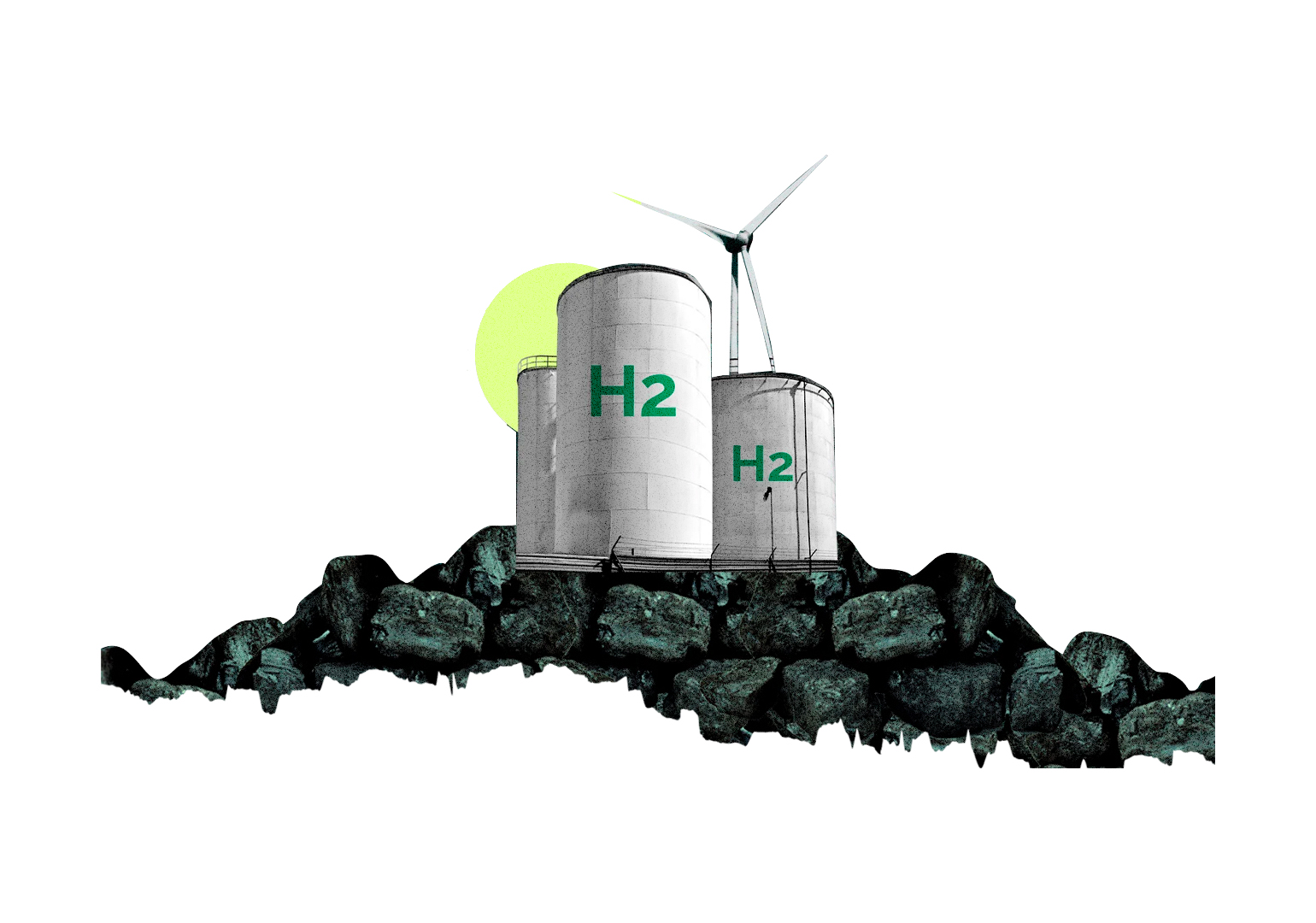
Salome Janelidze, Board Member of the Energy Learning Center of GNERC talks about the hydrogen, as a future energy source for the world:

“Although using hydrogen as a fuel is not a new concept, interest in it has increased significantly in recent years. The reason is the fight against climate change. Low-emission hydrogen is often seen as an essential element in achieving net-zero emissions by 2050 in line with the Paris Agreement. According to the International Renewable Energy Agency (IRENA), in a scenario where the increase in global average temperature compared to pre-industrial levels is limited to 1.5°C, by 2050 the share of hydrogen is 14% of total energy consumption, of which 94% is produced from renewable sources.
The potential of low-carbon hydrogen is particularly high in sectors where it is difficult to replace fossil fuels. Such are steel and cement production, chemical industry, as well as fueling aviation and maritime transport. In addition, hydrogen can be used for other purposes, including long-term energy storage, power generation, and system balancing. By replacing fossil fuels with hydrogen, it is also possible to increase the energy independence of states, which became especially important after the start of the Russia-Ukraine war.
Although hydrogen is one of the most widespread elements on Earth, it is rarely found in free form in nature. It is mostly found in molecules, along with other elements, and energy is required to separate it. Hydrogen is distinguished by the energy source used for its production: gray hydrogen is produced by natural gas, blue – by natural gas with the application of carbon capture and storage technology, black – by coal, pink – by nuclear energy, etc. As for green hydrogen, it is separated from water molecules through electrolysis, using electricity produced by renewable energy.
Hydrogen is still used in large quantities in industries such as ammonia production for fertilizer and oil refining. Green hydrogen could be primarily used to meet the current demand. According to the International Energy Agency (IEA), the share of low-emission hydrogen in hydrogen production is less than 1% today. The replacement of hydrogen produced by fossil fuels with green hydrogen will facilitate the large-scale use of electrolysis technology, which in turn will reduce its cost.
Low-carbon hydrogen also has many skeptics. The reason is past failed attempts to develop a clean hydrogen economy and a number of challenges that hinder the widespread deployment of low-carbon hydrogen. One of the challenges is its cost, which exceeds the price of electricity and fossil fuels. As a result, demand for the product is low, which in turn makes it difficult to finance clean hydrogen projects. Furthermore, the production of green hydrogen requires large amounts of renewable energy and water. An additional challenge is also the construction of the infrastructure necessary for hydrogen transportation and the establishment of the regulatory environment necessary for the development of the sector.
Considering the mentioned challenges, it is particularly important to support low-carbon hydrogen projects by the states. The United States and the European Union are leading the way in terms of policies supporting clean hydrogen. The U.S. Inflation Reduction Act of 2022 provides up to $3 in tax credits for one kilogram of hydrogen, which, according to BloombergNEF, would allow low-carbon hydrogen to compete with hydrogen produced by fossil fuels. Last week, the U.S. Department Treasury introduced a proposed guidance on qualification for the tax credit, which would require a hydrogen producer to be connected to the same regional grid as the renewable energy producer. In addition, the electricity used for the production of hydrogen shall come from a newly built generator, and from 2028, hourly matching of produced hydrogen with clean-energy production will be required.
The REPowerEU plan, adopted following Russia’s aggression against Ukraine, provides specific targets for the production and import of clean hydrogen in the EU by 2030, totaling 20 Mt per year. In November, the European Commission approved the first list of Projects of Common Interest and Projects of Mutual Interest based on the revised TEN-E Regulation, where 65 of the 166 projects are hydrogen projects. In addition, a pilot auction was launched at the end of November, which will allocate up to 800 million euros of support for hydrogen projects. On December 8, the European Parliament and the Council reached an agreement on the EU’s hydrogen and decarbonized gas package, that will lay the foundation for the creation of a hydrogen market in the EU and will regulate its transmission, distribution and storage.
According to the IEA, the number of announced low-emission hydrogen production projects is growing rapidly and could reach 38 Mt by 2030. Nevertheless, the final investment decision is made with respect to only 4% of the potential production. At the same time, there is an asymmetry between demand and supply, as the policy of promoting low-emission hydrogen is mainly focused on its production and less on its consumption. According to the IEA, the global target figure for low-emission hydrogen production is a total of 27-35 Mt, while the corresponding figure for consumption is only 14 Mt. Since public resources are limited, the active participation of the private sector is necessary for the development of the sector. In this regard, the current trend today is unsatisfactory. Globally, private enterprises have signed agreements to purchase up to 2 million tons of low-emission hydrogen, although more than half of them are non-binding.
One of the important prerequisites for the development of low-carbon hydrogen is the certification of its origin, which confirms its low emissions and avoids greenwashing. Hydrogen certification schemes are already being developed in some countries, but international cooperation and mutual recognition of certificates by states is necessary.
Low-carbon hydrogen has great potential as a sustainable fuel, but relevant challenges related to its production, cost, transportation and regulation must be overcome. With governments, the private sector and international cooperation, hydrogen can become an important part of our future energy landscape”. S