
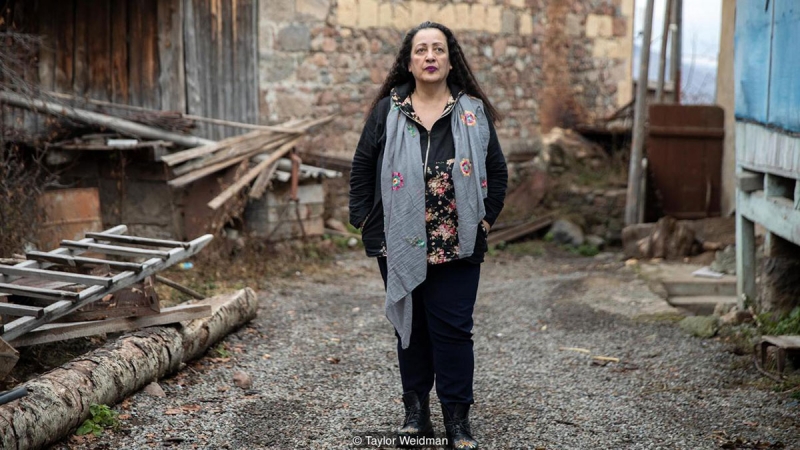
Georgia’s artisanal cheesemaking tradition was forced underground due to an oppressive Soviet-planned economy, but one woman is dedicated to bringing the ancient varieties back.

According to researcher Ana Mikadze-Chikvaidze, Georgia may be the homeland of cheese – an accolade to complement the country’s more well-known claim as the cradle of wine. She says that the local Mtskheta museum, located about 26km north of Tbilisi, has archaeological evidence hinting that Georgians thousands of years ago may have been the first-known humans to make cheese. Over time, different regions of Georgia developed distinct techniques resulting in a veritable tapestry of cheese varieties.
Yet, many Georgians today have little knowledge of this history or the country’s unique cheeses due to 70 years spent under an oppressive Soviet-planned economy that limited which cheeses could be produced for general consumption and therefore forced artisanal cheesemaking underground. Mikadze-Chikvaidze, now chairwoman of the Georgian Cheese Makers’ Association, is dedicated to changing that by travelling to remote villages, locating farmers who are still making these cheeses and bringing them back into the limelight.
Under the Soviet system between 1921 and 1991, economic planners wanted to create large quantities of Georgian cheese quickly to help feed the people of the USSR. Small-scale, often aged varietals, which took considerable time and effort to produce, didn’t fit these plans, and instead, only four types of simpler Georgian cheeses were made in bulk: imeruli, sulguni, karkhunli (which literally translates to “factory cheese”) and guda (completely unrelated to Dutch gouda).
The artisanal cheeses were forced underground likely because creating goods outside the Soviet system was frowned upon and many cheesemakers were afraid of being punished for it. And after seven decades in a system where only four types of cheese were readily available, most Georgians today are completely unaware that the country is home to dozens of other cheeses.
Mikadze-Chikvaidze first heard about these “underground” cheeses years ago during a conversation with Georgian ethnographer Tamila Tsagareishvili. Mikadze-Chikvaidze, like many other Georgians, only knew of the four types of cheese available at stores and was shocked to hear that Georgia had so many other varieties. She then set out to find these old cheeses, discovering books on the subject that mentioned the regions where the cheeses were traditionally made – often remote, mountain villages like Andriatsminda (pictured) where residents still followed the old traditions.
For years, Mikadze-Chikvaidze travelled to these villages, interviewing elderly residents and searching for cheesemakers still carrying out the ancient processes. By speaking to the older generations, she learned how the cheeses were made with the hope of reintroducing the varieties to the Georgian public.
In these isolated places, Mikadze-Chikvaidze found women like Galina Inasaridze (pictured), who were quietly carrying on the cheese-making traditions passed down through the generations. During the Soviet era, these cheesemakers were sometimes able to continue making their artisanal cheeses, but had to keep a low profile and couldn’t sell or distribute the unsanctioned varieties for fear of being seen as operating outside the Soviet system. Even in the remote village of Andriatsminda far away from the central Soviet administration, Inasaridze said she would only bring out the cheeses for family or on special occasions.
According to Mikadze-Chikvaidze, Andriatsminda and Chobareti about 12km away are the only two villages that still make tenili, a fresh rope cheese made from cow’s milk. In these villages, a few families like Inasaridze’s still take the time to milk their family cows and hand pull each batch of cheese.
Inasaridze, the local tenili maker in Andriatsminda, learned the art from her mother and grandmother, and she has in turn taught it to her children. She is also employing two local women to help with the cheesemaking, creating new jobs at a time when many rural residents are moving to cities where there are more economic opportunities beyond agriculture.
For Inasaridze, this traditional knowledge has enabled her to create a successful, growing business. Since Mikadze-Chikvaidze first met her in 2010 and helped create a market for her cheese in Tbilisi, she has gone from selling a few kilos of cheese per month to around 500 kilos, while simultaneously increasing the price of her cheese. It’s become evident that Georgians are interested in their culinary history and are eager to try the unique cheese varieties coming from the country’s remote villages.
To educate Georgians about the country’s rich cheese varieties and help develop the market for artisanal cheesemakers, Mikadze-Chikvaidze has been organising an annual cheese festival in Tbilisi since 2015, which has recently expanded to provinces throughout the country. Here, visitors can learn about and taste a variety of Georgian cheeses. In addition to the festival, Mikadze-Chikvaidze has also helped to open cheese shops in the capital.