
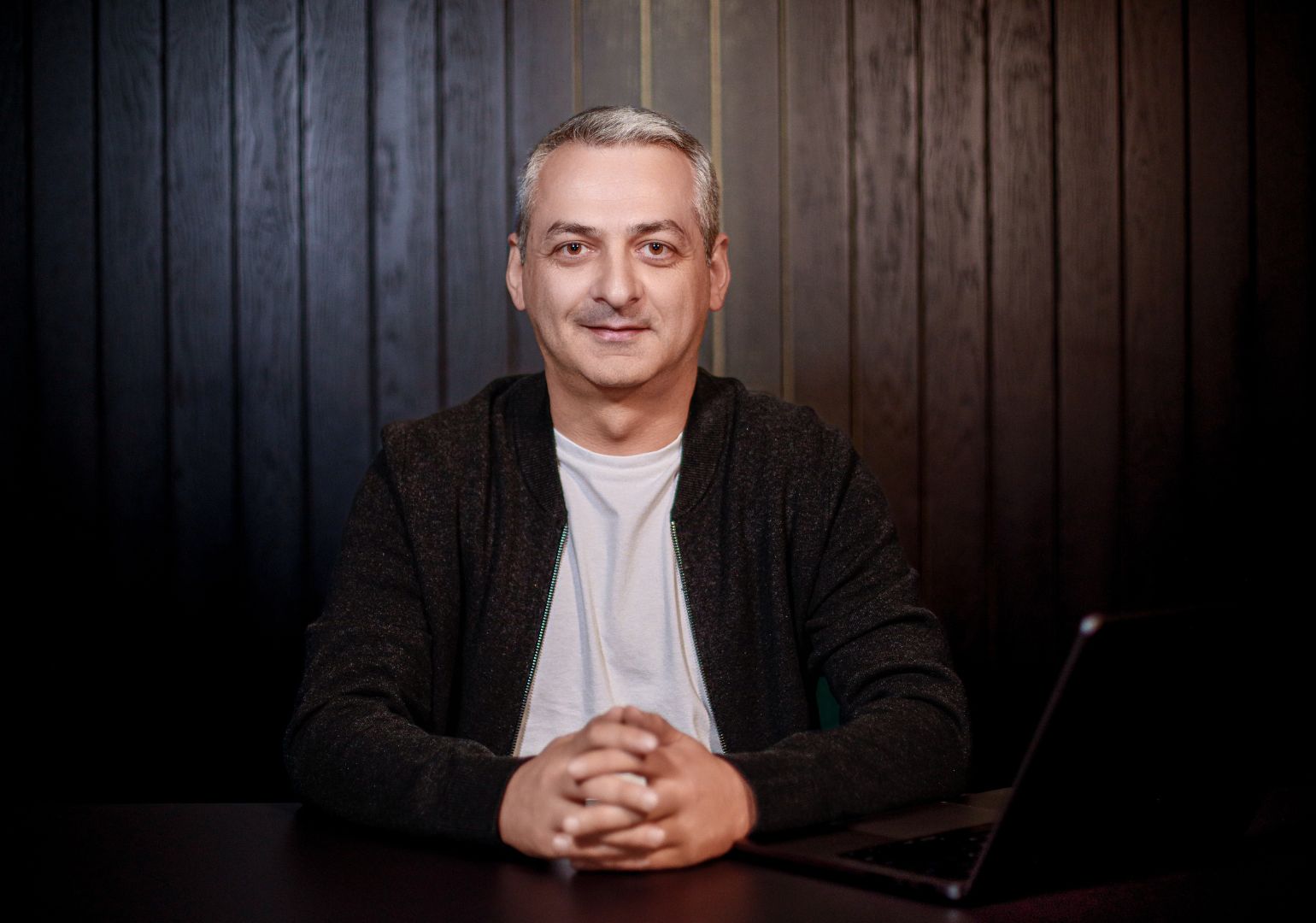
The artificial intelligence frenzy has already taken over the global business scene, and it has the potential to completely transform our lives. With rapid technological progress come new challenges, ideas, and a lack of knowledge. This is why this field, and the world at large, need more qualified professionals like Zurab Jishkariani, who has 18 years of expertise in cybersecurity, is certified by Microsoft and Google, and trains other professionals as well as AI systems. In an interview with Forbes Georgia, he shares his experience, views, and guidelines on navigating the cyber world.

Artificial Intelligence (AI) is developing rapidly worldwide, with technology companies investing billions in this field. What is the situation in Georgia in this regard?
Let’s first describe what artificial intelligence is. AI isn’t some Hollywood robot with emotions; it excels at specific tasks, like recommending movies you might enjoy or recognizing faces in photos. These AI systems use algorithms to process data, detect patterns, and modify their behavior accordingly. Imagine machines that can learn, reason, solve problems, and even make decisions – that’s the essence of AI.
In Georgia, a significant number of businesses across both public and private sectors have incorporated automation into their operations. Common applications include chatbots, which provide users with tailored information and scheduling capabilities. Additionally, facial recognition technology allows individuals to remotely register as bank clients, with the system autonomously verifying their identities without the need for human intervention. Moreover, numerous startups are focusing on developing AI technologies designed specifically for the Georgian market and tailored to the Georgian language, highlighting a crucial area of growth.
The government of Georgia has identified three primary technological priorities to boost innovation and technology development within the country, one of which is artificial intelligence. To support this, a new status for innovative startups will be introduced, granting tax exemptions to qualified startups for three years. Supported by local experts and international collaborators, Georgia will formulate a national strategy for artificial intelligence development. A dedicated research team will be established to focus on advancing and integrating artificial intelligence across various sectors, including education, healthcare, agriculture, and more, with specific emphasis on incorporating the Georgian language.
The development of AI offers many benefits, and it’s already being actively used in education, energy, the economy, and other fields. However, there are also significant challenges. What are the main risks associated with AI at this stage?
As artificial intelligence becomes more widespread, safeguarding it against security risks is increasingly a topic of public interest. When we consider the protection of AI, both safety and ethical aspects require attention.
From a security perspective, it’s crucial to integrate safety features from the very beginning of AI system development. These systems must be shielded from adversarial attacks, in which attackers manipulate input data to induce the AI to make misleading decisions. Protecting the integrity of data used for AI training and operation is also vital. Techniques like encryption, anonymization, and strict access controls can help prevent unauthorized access and data leakage.
Ethically, it’s important to detect and mitigate biases within AI systems. Because AI systems learn from data, they risk inheriting existing biases from their training datasets. Using a diverse and inclusive database is critical to ensure fairness and equity in AI decision-making.
User control and privacy also hold significant importance. Users should have autonomy over their personal data and be informed about when and how AI is used in decision-making processes that affect them. Establishing clear regulations around data privacy and the application of AI is critical to maintaining user trust and upholding ethical standards.
How much is the demand for AI professionals growing, and how is the industry addressing this demand?
The demand for artificial intelligence professionals is growing significantly, driven by the integration of AI into various industries. This rise in AI-related jobs is not only creating new opportunities but also reshaping existing roles in the global labor market.
A gap exists between the number of skilled AI professionals and the growing demand for their expertise, presenting numerous opportunities for individuals with the right skills. To address this gap, many organizations are promoting the development of AI skills among their current employees through training programs. Additionally, higher education institutions are expanding their AI-related offerings to meet this growing demand.
Have new job categories emerged as a result of AI development?
According to a World Economic Forum report (2023), AI is projected to create about 97 million new jobs worldwide. This growth is driven by the increasing capabilities of AI in sectors like advertising, data analysis, and automation. AI’s evolving abilities enable more efficient operations and give rise to new job categories, particularly in advanced technologies like deep learning and machine learning.
What are the primary sources of cybersecurity threats today, and what major challenges do they pose?
Artificial intelligence (AI) introduces certain cybersecurity risks. Individuals with malicious intent can use AI’s capabilities to refine and enhance cyberattacks, making them more sophisticated and difficult to detect. Deepfake technology, for example, can create convincingly manipulated videos and images, while complex algorithms can generate phishing emails that closely resemble legitimate messages.
These tools can be used for identity theft, fraud, and disinformation campaigns, potentially compromising security infrastructure and personal privacy on an unprecedented scale.
Additionally, AI systems may be vulnerable to attacks that damage their algorithms or involve “data poisoning,” where attackers insert malicious data to manipulate AI’s decision-making processes. Since AI often processes large amounts of personal data, the risk of severe privacy breaches is higher if this data is not properly secured and managed.
How advanced is cybersecurity education in Georgia, and what is the level of expertise in this field?
I conducted a study in secondary schools focusing on cybersecurity education and found several factors indicating a lack of a standardized cybersecurity curriculum. Instead, many schools simply incorporate cybersecurity topics into other subjects. The results of this research are crucial for enhancing cybersecurity education at the secondary level. It was observed that a formalized cybersecurity curriculum is missing, as some schools choose to integrate cybersecurity content into existing subjects. This highlights the urgent need for a standardized cybersecurity curriculum to be developed and implemented in secondary schools to adequately prepare students.
Georgia, like other countries, faces a shortage of cybersecurity specialists. This field has a significant demand for specialists, but educational institutions struggle to produce enough skilled professionals. Moreover, the public sector often cannot match the salaries offered by private firms, leading to a migration of talent to higher-paying positions in foreign companies. Consequently, Georgia is experiencing a net loss of cybersecurity experts.
What advice would you give to organizations and individuals to ensure AI security?
Organizations and individuals who understand the security implications of artificial intelligence (AI) must develop a culture of continuous learning and vigilance. Stay up to date with the latest developments in AI and cybersecurity, as the situation evolves rapidly. Take a proactive rather than reactive approach to security by anticipating potential threats and regularly updating your security mechanisms. Encourage cross-departmental collaboration to ensure a holistic understanding of AI systems across your organization. Finally, always prioritize ethical considerations and user privacy when developing or deploying AI, as trust is a crucial component of successful AI integration in any sector.
What skills are most important for starting a career in AI and cybersecurity?
Starting a career in cybersecurity requires a strong foundation in several areas. First, fundamental IT skills are critical, including understanding operating systems, networks, and databases. Programming knowledge, such as scripting, is necessary to automate tasks and identify security vulnerabilities. Additionally, it’s important to have a solid understanding of security protocols across various platforms, including Internet and network security. Being familiar with the cyber threat landscape and hacking techniques is vital to protecting against attacks.
A successful cybersecurity professional must also understand the legal and ethical implications of their work, ensuring compliance and maintaining integrity when handling digital data.
In the field of artificial intelligence, the skill set shifts slightly, with an emphasis on technical and analytical capabilities. Programming skills, especially in Python, are essential due to the extensive libraries and tools available for AI development. A strong foundation in mathematics, particularly in statistics and probability, is crucial for understanding and creating AI algorithms.
Both fields are dynamic and complex, requiring a commitment to continuous learning to stay updated with the latest developments and perform effectively.
In June 2023, the European Union became the first to regulate artificial intelligence with the EU AI Act. What’s the current regulatory situation regarding AI around the world, including in Georgia, and what changes might be needed?
Government regulation plays a key role in setting benchmarks for AI safety. In 2023, President Biden issued an Executive Order on Safe, Secure, and Trustworthy Artificial Intelligence. The EU AI Act of March 2024 is a pioneering legislative framework in Europe. Additionally, initiatives like OWASP’s guidelines on AI Security and Privacy, along with the ISO42001 standard, offer robust models for organizations to follow. These frameworks pave the way for preemptive measures against the adverse impacts of AI and provide comprehensive strategies for AI risk management.
In December 2023, Georgia was granted EU membership candidate status. Previously, Georgia had signed an Association Agreement with the EU, detailing the country’s development plan according to European standards. The implementation of this agreement will help transform Georgia into a country compatible with EU standards. As part of this transformation, the EU AI Act will also be integrated into Georgia’s development plan.
What’s your short-term and long-term outlook for AI security?
In the short term, I see two main areas of risk: bias and manipulation. Biases in AI training data can lead to discriminatory outcomes. For example, an AI system used for loan approvals could perpetuate historical biases against certain demographics, causing serious social and economic consequences. We need to be vigilant about ensuring fair and unbiased datasets to train AI systems.
AI is also susceptible to manipulation by malicious actors. Hackers could exploit vulnerabilities to trick AI systems into making incorrect decisions. For instance, an AI used for facial recognition could be fooled by deepfakes. Robust cybersecurity measures are crucial to mitigate these risks.
Looking ahead, the future of technology is speculative but fascinating. The pursuit of Artificial General Intelligence (AGI), where machines can perform any cognitive task that humans can, stands as a significant but distant milestone. Its realization could profoundly alter our technological landscape.
As AI becomes more integrated into our society, its ethical and societal impacts will grow, potentially transforming areas like education, social interactions, and governance. The concept of a technological singularity, where AI surpasses human intelligence, is speculative but remains a crucial topic among experts.
It could also exacerbate global inequalities, as disparities in AI access could deepen divides between nations. On a positive note, the convergence of AI with creativity could innovate new artistic and creative expressions, redefining these fields entirely. S